Who It Suits
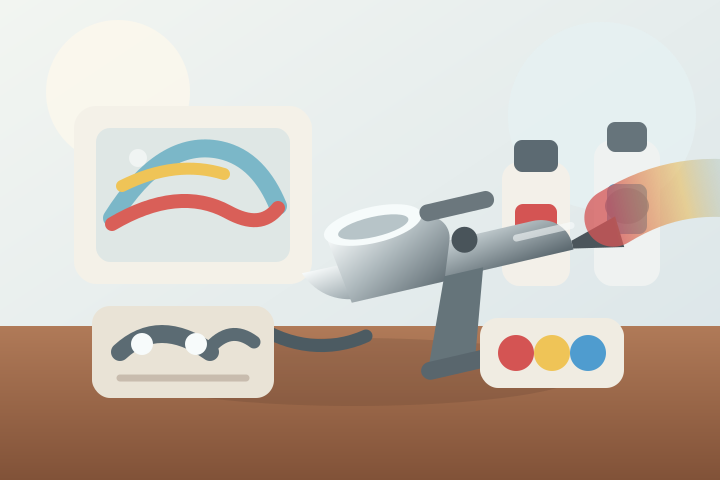
Airbrushing is painting with compressed air: a small tool called an airbrush atomises paint into a fine mist, and you control the flow with a trigger and your hand position. As a beginner you will spend a lot of time on setup and practice — thinning paint, adjusting air pressure, spraying dots, lines, and gradients on scrap paper, and cleaning the tool — before you move on to real projects such as model kits, helmets, canvas, or cakes.
Airbrushing suits people who enjoy smooth colour transitions, technical control, and a tool-based painting process. It is a good fit for model makers, illustrators, custom painters, cosplayers, cake decorators, and artists who like testing surfaces, masks, and layered effects. The honest appeal is that it produces results that are hard to get with a brush — soft gradients, crisp stencil edges, even base coats. The honest constraints are that it is a real equipment purchase (airbrush plus compressor), it demands a cleaning discipline, and because it creates a fine airborne mist, you need to think about ventilation and respiratory protection from the first session.
Getting Started
An airbrush is a small pen-like tool that uses compressed air to break paint into a fine mist. Two terms cover most of the buying decision:
- Dual-action vs single-action — on a dual-action airbrush, pressing the trigger down releases air only, and pulling it back adds paint, so you control air and paint separately. This is the standard for most hobby work. Single-action brushes are simpler and cheaper but give less control.
- Gravity feed vs siphon feed — a gravity-feed brush has its paint cup on top, so paint flows into the needle by gravity; it handles thinner paint and is the common beginner choice. A siphon-feed brush holds its reservoir below and takes more paint.
The needle and nozzle size sets the spray width: 0.3–0.5 mm covers most beginner work, and 0.2 mm is for fine detail. The air supply is a small compressor, and the features that matter are a pressure gauge, a moisture trap (which removes water that condenses in the air line), and a small tank that keeps pressure steady.
Start with a beginner dual-action airbrush, a small compressor with a moisture trap, and water-based acrylic airbrush paint — water-based paint cleans up with water and is the lower-hazard common choice. Practice on paper, plastic spoons, scrap card, or primed test pieces before moving to a model, helmet, canvas, or finished object.
Basic Gear
Essential:
- Dual-action airbrush (a 0.3–0.5 mm needle is a versatile starting point).
- Compressor with hose, pressure gauge, and moisture trap.
- Airbrush-ready acrylic paint, or paint thinned to the right consistency.
- Cleaner, rinse pot, and soft cleaning brushes.
- Respirator or ventilation setup matched to the paint.
Optional at first:
- Masking tape, stencils, or frisket film.
- Scrap surfaces for testing spray patterns.
- A portable spray booth or a homemade cardboard booth to catch overspray.
- A turntable for rotating the work.
- Extra needle sizes and spare parts as the kit ages.
First Session
Learn the trigger before trying artwork. Start with air only — press the trigger down without pulling it back — then slowly pull it back to add paint; that order gives a smooth spray and prevents spatter. Spray dots, lines, fades, and wide passes while adjusting distance, air pressure, and paint flow, and note the settings that worked. Empty the moisture trap before you start and check it during the session, because condensed water will spit out of the hose and ruin the work. Clean the airbrush between colours and at the end of the session so you understand how quickly paint can dry in the nozzle.
First Month
Use the first month for controlled exercises and small projects. Practice even base coats, simple gradients, stencil shapes, masking edges, and correcting overspray. A few terms will do most of the work:
- Atomisation — how finely the air breaks the paint into a mist; pressure, paint consistency, and needle size all affect it.
- Overspray — mist that lands outside the target area; it is why you protect the work surface and ventilate the space.
- Thinning — adjusting paint consistency for the brush; a common rule of thumb is the consistency of skimmed milk, and pre-thinned airbrush paints work straight from the bottle.
- Masking / frisket — covering the areas you do not want to spray, for crisp edges and stencils.
Keep notes on paint ratios, pressure settings, needle size, and which surfaces accept paint cleanly. Finish the month with one small real project — a model kit, a stencil on a board, or a gradient panel.
Costs
Airbrushing has a moderate to high starting cost because the airbrush, compressor, hose, cleaner, paints, masks, and safety setup are all part of the basic kit. Entry-level airbrush-and-compressor kits are typically around US$50–150 (UK listings are often £50–120), but prices vary by region and change over time, so check current listings before budgeting. Costs rise with extra needle sizes, spray booths, specialist paints, spare parts, and larger custom projects.
Lower-cost routes exist: art schools and community colleges run airbrush classes, makerspaces and model clubs sometimes keep airbrush stations, and used kits are a common way in. Starting with water-based paint keeps consumable costs and cleanup simple.
Space Needed
A small desk or bench can work, but the space needs protection from overspray and enough ventilation for the materials you use. A portable spray booth, cardboard booth, cutting mat, and organised cleaning area make setup easier to repeat. The compressor adds noise, so a shared bedroom or quiet room may matter, and a spray booth also keeps the mist off nearby people and surfaces.
Solo or Social
Airbrushing is usually solo practice, especially while learning cleaning and control. Classes, model clubs, cosplay groups, custom paint communities, and online critique can add feedback and project ideas. The r/airbrush subreddit is an active place for troubleshooting and gear questions, and airbrush art has a competitive side — national and international competitions, such as those run by the Japan-based World Airbrush Association, show the range from casual to professional work.
Common Mistakes
- Skipping cleaning between colours or after a session.
- Using paint that is too thick for the needle and pressure.
- Spraying too close and flooding the surface.
- Ignoring ventilation because the paint seems low odour.
- Starting on an important project before testing the surface.
- Forgetting to empty the moisture trap, so water spits out of the hose.
- Buying a fine 0.2 mm needle before the basic 0.3–0.5 mm work is comfortable.
Safety / Accessibility
Airbrushing creates a fine airborne paint mist, so the first line of defence is ventilation — a spray booth, a well-ventilated room, or outdoor work — with a respirator as the last line. NIOSH’s guidance on respirator types explains the options: match the respirator to the hazard, because a fine paint mist calls for particulate protection (for example a P100-rated filter), while solvent-based paints and thinners add vapours that need organic-vapor cartridges as well, and a tight-fitting respirator only works if it seals to your face. Check the product label and safety data sheet for the specific paints you use, and avoid spraying solvent-based paints indoors without proper equipment. Eye protection is sensible when spraying near your face or working with stencils.
Trigger extenders, lighter hoses, seated setups, turntables, and pre-thinned paints can make longer sessions easier.
Where It Can Go
Airbrushing can lead toward miniature painting, scale models, illustration, murals, automotive custom paint, motorcycle helmets, cosplay props, nail art, cake decorating, textile work, or mixed media painting. For cake work, only food-safe paints made from edible ingredients (for example powdered sugar and food colouring) should touch food. The same skills that start on paper — gradients, stencils, even coats — transfer directly to these fields, and airbrush art competitions and professional custom-paint work mark the more advanced end of the hobby.
References
Last reviewed: 16 August 2026.
Official safety sources:
- OSHA: Spray Operations — Controlling Hazards for why spray booths are the standard engineering control for spray work (protecting the painter’s health and reducing fire and explosion hazards from flammable mists).
- NIOSH: Respirator Types and Use for respirator types, the hierarchy of controls (ventilation first, respirator as the last line of defence), and why fit matters.
Specialist guides:
- The Army Painter: Paint Like a Pro — Airbrush Basics for choosing dual-action vs single-action, gravity vs siphon feed, needle sizes, compressor features, and thinning.
Background:
- EBSCO Research Starters: Airbrushing in Advertisements for the airbrush’s late-nineteenth-century origins and its use in photo retouching, illustration, and industry.
Community resources (optional):
- r/airbrush for troubleshooting, gear questions, and work-in-progress feedback.
- World Airbrush Association (Japan-based) for airbrush art competitions and events.
Related Hobbies
Painting, miniature painting, model making, cosplay, drawing, digital illustration, wood burning, ceramics, resin art, and photography all connect naturally with airbrushing.