Who It Suits
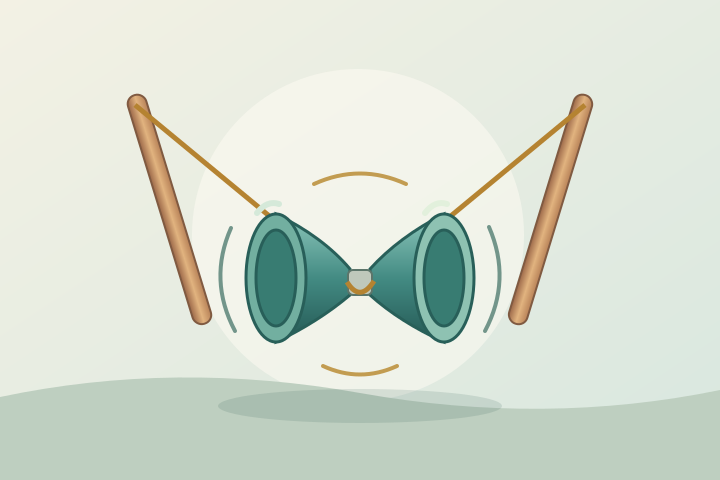
A diabolo is a spool-shaped juggling prop with two cups joined by an axle. You hold a stick in each hand and use the string between them to spin, guide, throw, and catch it. Unlike a yo-yo, the prop is not tied to its string: it can leave the string completely during a throw.
It suits people who enjoy learning with their hands and turning repeated attempts into a small, satisfying skill. The first reward might be keeping it spinning without a wobble; later it might be catching a throw you have missed all week. You can practise quietly on your own or take turns with a friend. Expect dropped props, tangled string, and some time spent learning control before tricks feel easy.
Decision Snapshot
| Beginner question | Practical answer |
|---|---|
| Best for | People who enjoy coordination, playful practice, and visible progress. |
| May dislike it if | Repeated resets frustrate you, or your only practice space is crowded. |
| First commitment | Borrow a complete set and try a short session before buying. |
| Suggested practice time | Ten to fifteen minutes a few times a week, adjusted to your energy. |
| Space requirement | Clear room for both arms, moving sticks, and a dropped or misdirected prop. |
| Solo or social? | Either: solo drills work well, while a club offers feedback and shared equipment. |
Getting Started
Start with one diabolo, two handsticks, and proper diabolo string. Ask a juggling club or circus workshop to let you try equipment that feels comfortable to lift and control.
There are two common axle types. A fixed axle turns with the cups and gives direct friction between the string and prop. A bearing axle allows longer coasting; common one-way designs must face the correct direction for your driving hand. Both can be used for beginner practice. Match your tutorial to your equipment and handedness rather than assuming every demonstration will feel the same. Renegade Juggling’s equipment guide explains the differences.
Follow the supplied instructions for attaching and adjusting the string. It should allow a relaxed working position without forcing you to lift your shoulders or letting the prop drag on the ground. Have an experienced player check the setup if it feels awkward.
Basic Gear
| Item | Start with | Consider later |
|---|---|---|
| Diabolo | One balanced beginner prop that feels manageable. | A second diabolo when one-prop control is reliable. |
| Handsticks | A comfortable pair with secure string attachments. | Different grips or materials after trying someone else’s set. |
| String | Purpose-made diabolo string and a spare length. | Different string types once you can identify a specific preference. |
| Practice area | An uncluttered spot with good visibility. | A hall or club space for larger movements. |
| Instruction | A beginner demonstration or structured video series. | A workshop for feedback on a particular trick. |
Keep the string dry and replace it when frayed; string condition affects how it grips the axle. Check the manufacturer’s care instructions before working on bearings or tightening parts. Renegade Juggling discusses string wear and equipment choices.
First Session
Give yourself permission to spend the whole session learning to start and reset.
- Inspect the string and sticks, clear the practice area, and check the orientation if you have a one-way bearing.
- Follow a beginner demonstration to roll-start the diabolo and lift it onto the string.
- Use small, repeated movements of your driving hand to build spin while the other hand helps guide the string. Keep your shoulders relaxed.
- Practise recognising a tilt and making the small correction shown in your tutorial. Reset if it tips too far.
- Once the spin is steady, try a low throw: spread the sticks to lift the diabolo off the string, then guide its axle back onto the string and soften the catch.
Keep throws low and skip them if the space is unsuitable. A steady start is already a successful first session. NetJuggler’s beginner tutorials cover setup, acceleration, stability, and throwing in that order.
First Month
This is a suggested practice plan, with no deadline for moving to the next stage.
| Stage | Focus | A useful checkpoint |
|---|---|---|
| Week 1 | Comfortable starts and resets. | You can restart without getting annoyed by every drop. |
| Week 2 | Keeping the prop level. | You notice a tilt early and can sometimes correct it. |
| Week 3 | Low throws and catches. | Several small throws land close to where you intended. |
| Week 4 | Linking familiar movements. | You can start, make a controlled throw, catch, and finish calmly. |
Choose one thing to work on per session. If a sequence keeps falling apart, return to the last movement that felt comfortable. Recording a short clip can help you spot differences between attempts, or give a club member something specific to comment on.
Costs
The initial purchase is a complete set: diabolo, sticks, and string. Check whether sticks are included when comparing prices; a prop-only listing is not a complete starter kit. Borrowing at a club or workshop can make the first experiment inexpensive, although sessions may have a fee.
After setup, budget for replacement string. Lessons, travel, upgraded sticks, illuminated props, and additional diabolos are optional expenses. Compare current local prices for a complete beginner set before choosing a budget; there is no need to buy a collection to practise the basics.
Space Needed
Think beyond the space the diabolo occupies while spinning. A missed catch can send it sideways, and both sticks need room to move. A clear garden, a quiet permitted patch of park, or a suitable indoor hall can work. Check overhead clearance before any throw and keep away from windows, screens, ceiling fans, roads, and people passing through.
For a small room, keep practice to controlled starts and low string work if you can provide enough clearance. Save throws and broad swinging movements for a larger space.
Solo or Social
Solo practice makes it easy to repeat one movement at your own pace. Practising with a friend adds encouragement and a second view of where the prop starts to tilt. Take turns in a shared space rather than throwing across each other’s practice area.
Look for juggling clubs, community circus sessions, or beginner workshops. Ask whether equipment is available to borrow and whether someone can help with diabolo specifically.
Common Mistakes
- Trying high throws before low catches feel dependable.
- Pulling harder whenever something goes wrong instead of checking alignment.
- Copying a tutorial without checking handedness or bearing direction.
- Continuing with tangled or worn string.
- Adding several tricks at once and losing track of which movement needs work.
- Treating every dropped prop as a failed session rather than useful feedback.
Safety / Accessibility
A spinning diabolo and moving handsticks need a clear buffer around the player. Keep other people and pets outside that area, supervise children, and store loose string out of young children’s reach. Let a badly missed throw fall into the clear practice area instead of lunging into furniture or another person. Leave stick-release tricks and high throws until you have suitable space and instruction.
Take breaks when your grip becomes tense or your arms tire, and stop if movement hurts. Seated practice may work with enough clearance for the string and sticks; a helper can retrieve drops. Bright contrasting string, comfortable grips, shorter sessions, and a lighter prop are possible adaptations to try. The usual setup uses both hands, so someone needing a different arrangement may benefit from an adaptive circus instructor.
Where It Can Go
Once starts and catches are comfortable, explore a simple stick grind or an orbit around an arm with a step-by-step lesson. NetJuggler includes both in its tutorial series. Longer-term interests might include multiple diabolos, choreographed routines, filming progress, or helping a friend learn their first start. A small set of smooth moves can be rewarding without becoming a performance project.
References
Last reviewed: 23 September 2026.
- NetJuggler: Diabolo tutorials — demonstrations of setup, spin control, throws, and early tricks.
- Renegade Juggling: How to Select a Diabolo — specialist guidance on axles, cups, handsticks, and string.
The practice schedule is a suggested starting point, not a promise of progress. Equipment links provide background rather than a requirement to buy a particular product.
Related Hobbies
Try juggling for toss-and-catch patterns or yo-yoing for another string-based skill. Both offer the same pleasure of gradually turning an awkward movement into something fluent.