Who It Suits
Sport stacking, sometimes called cup stacking, involves building cups into pyramids and collecting them back into nested stacks in a set order. The satisfying part is finding a rhythm: two hands moving together, a clean finish, and a sequence that feels a little easier each time. You can practise without a clock or turn it into a timed challenge.
It suits people who enjoy repeatable coordination skills, compact equipment, and short bursts of concentration. Expect dropped cups, plenty of repetition, and a noticeable plastic clatter. If you want a quiet hobby, an outdoor activity, or lots of creative variety from every session, those constraints may matter more than the appeal of improving your time.
Decision Snapshot
| Beginner question | Practical answer |
|---|---|
| Best for | People who enjoy hand skills, rhythmic practice, and small measurable improvements. |
| First goal | Build and collect one three-cup pyramid smoothly using both hands. |
| Starter equipment | A borrowed or basic set of 12 stacking cups and a stable table. |
| Time commitment | Try five to fifteen minutes per session; longer sessions are optional. |
| Space requirement | A clear tabletop with room for three groups of cups and comfortable arm movement. |
| Noise level | Repeated tapping and clattering; a mat softens the sound. |
| Solo or social? | Either: personal practice, friendly races, partner activities, or organised events. |
Getting Started
Borrow a set if you can. Matching plastic drinking cups can give you a first taste, but cups that stick together or bend easily make the movements frustrating. Purpose-made stacking cups separate more reliably. Avoid glass and ceramic cups.
Start with three cups and follow a demonstration slowly, pausing to copy the hand movements. Use both hands from the beginning. Once you can build a small pyramid and collect it neatly, add more groups. A timer can wait until you know the sequence.
The Speed Stacks instructional guide illustrates the patterns and transitions. Use it as a visual companion rather than trying to learn every movement from a written description.
Basic Gear
| Item | Start with | Consider later |
|---|---|---|
| Cups | One set of 12 matching stacking cups. | Spare cups if any crack or go missing. |
| Surface | A stable table at a comfortable height. | A dedicated practice spot you can leave set up. |
| Mat | A thin, non-slip surface if the table is slippery or noisy. | A stacking mat with space for a compatible timer. |
| Timing | No timer, or a phone stopwatch for rough personal comparisons. | A hands-on stacking timer for more consistent timing. |
| Instruction | A free beginner demonstration. | Feedback from a club or experienced stacker. |
Keep a phone outside the cup area. Manually starting and stopping a stopwatch adds delay, so those times are useful for casual practice but should not be compared directly with competition results.
How Sport Stacking Works
An upstack builds a pyramid; a downstack gathers it back into nested cups. The numbers describe the cups in each group, not how many rows to build.
| Pattern | Cups used | Shape or sequence |
|---|---|---|
| 3-3-3 | 9 | Three separate pyramids, each with two cups below and one above. |
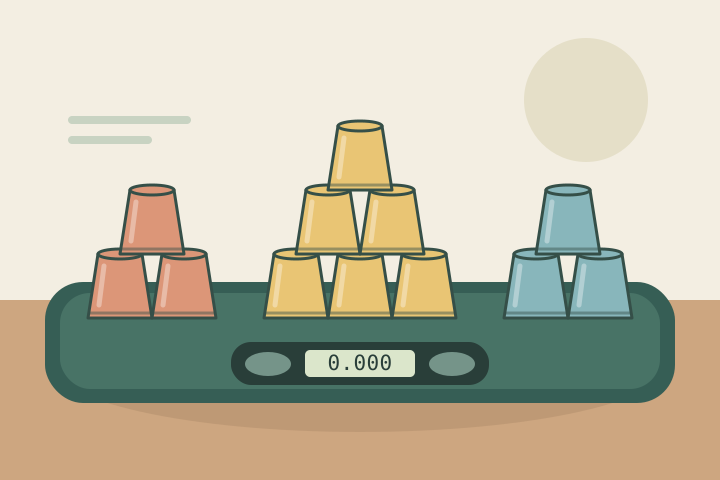
| 3-6-3 | 12 | A three-cup pyramid on each side of a six-cup pyramid; the middle pyramid has rows of three, two, and one. |
| Cycle | 12 | A 3-6-3, then two six-cup pyramids, then a ten-cup pyramid with a single cup on each side, finishing in nested groups of 3-6-3. |
The Cycle includes specific transitions between these arrangements. Learn those after the shorter patterns feel familiar. These sequence descriptions follow the official illustrated instructions.
For competition, the movement order, corrections, equipment, and timer procedure matter as well as speed. Check the World Sport Stacking Association rules and your event’s guidance before entering.
First Session
Set aside about ten minutes and leave the timer off.
- Clear the table, including drinks and anything breakable. Put three nested cups within easy reach.
- Make a two-cup base with one cup balanced above it, using both hands.
- Collect the cups back into one nested stack. Repeat gently until you can finish without knocking them over.
- Set out nine cups in three nested groups and follow a beginner 3-3-3 demonstration.
- Finish with a few comfortable attempts. Notice whether the harder part is separating cups, placing them, or collecting them again.
Your first useful milestone is a sequence you understand and can repeat. There is no need to reach a target time.
First Month
Treat this as a flexible practice plan, repeating a week whenever useful.
| Week | Focus | A useful milestone |
|---|---|---|
| 1 | Three-cup pyramids and a slow 3-3-3. | Complete the sequence without needing a reminder. |
| 2 | Learn the six-cup pyramid and combine it into 3-6-3. | Finish several controlled attempts. |
| 3 | Add occasional timing and practise the movement that causes most fumbles. | Record both clean attempts and mistakes, rather than only your fastest result. |
| 4 | Try the Cycle in small sections, or practise with a friend. | Enjoy a new challenge while keeping the shorter sequences comfortable. |
Short sessions make it easier to notice tension and stop before repetition becomes tiring. On a frustrating day, remove the timer and slow the movement down.
Costs
Borrowing equipment is the cheapest first step. If buying, compare a cups-only set with a bundle: you may already have a suitable surface and a way to time casual practice.
As a concrete price reference, the US Speed Stacks Starter Pack was listed at US $49.99 when checked on 23 September 2026. It includes 12 cups, a mat, a timer, and a gear bag. This is one retailer’s package price, not a minimum entry cost; delivery, taxes, regional availability, and future price changes can affect the total.
Optional spending includes replacement equipment, event entry, and travel. A premium set or timer is unnecessary for finding out whether you enjoy the basic activity.
Space Needed
A desk or dining table can work if it is steady and wide enough for the cup groups. Check that you can reach both ends without leaning awkwardly. Keep space around the table clear so fallen cups are easy to retrieve. Store the cups nested together between sessions.
Avoid thick, uneven fabric under the cups, which can make pyramids wobble. A thin mat can reduce sliding and some of the noise, though stacking will still be audible in a shared room.
Solo or Social
Solo practice lets you work at your own pace. For a relaxed shared session, take turns with one set, teach each other a sequence, or count clean finishes instead of racing. If friends have very different experience levels, compare each person’s progress with their own earlier attempts.
Organised stacking also offers partner and relay formats. The WSSA judging overview identifies individual, doubles, and relay events; local availability varies.
Common Mistakes
- Chasing a fast time before remembering the full sequence.
- Gripping cups tightly, making separation less smooth.
- Practising only the build and neglecting the collection back into stacks.
- Continuing through a fallen pyramid instead of pausing to understand the mistake.
- Moving to the Cycle before the smaller patterns feel comfortable.
- Treating one lucky fast attempt as a better measure than repeatable clean finishes.
Safety / Accessibility
Use lightweight, undamaged plastic cups and a stable surface. Keep drinks and breakables away from the practice area, retrieve fallen cups before they become trip hazards, and take breaks when your hands or arms tire. Stop if a movement hurts.
Seated practice, an adjusted table height, slower untimed sequences, and cups that contrast with the mat can make casual practice more comfortable. You can simplify patterns or adapt hand use to suit your needs. If you want to compete with an adaptation, ask the organiser about the applicable event format and rules before booking.
Where It Can Go
The hobby can stay a five-minute desk break or develop into a regular pursuit of smoother technique. Possible next steps include learning the full Cycle, helping a friend start, joining a stacking group, or entering a beginner-friendly event. Competition is optional; reliably finishing a pattern can be satisfying on its own.
References
Last reviewed: 23 September 2026.
Editorial note: The practice schedule is a suggested beginner plan, not a performance guarantee. The price is a dated US retailer example. Consult current event guidance for competition requirements.
- Speed Stacks: illustrated stacking instructions — diagrams and pattern transitions.
- World Sport Stacking Association: rules and regulations — competition guidance and rule updates.
- WSSA judging overview — individual and team event formats.
- Speed Stacks Starter Pack — package contents and the cited price example.
Related Hobbies
Speedcubing, juggling, cardistry, yo-yoing, drumming, and table tennis offer other ways to explore rhythm, coordination, dexterity, and repeatable skills.